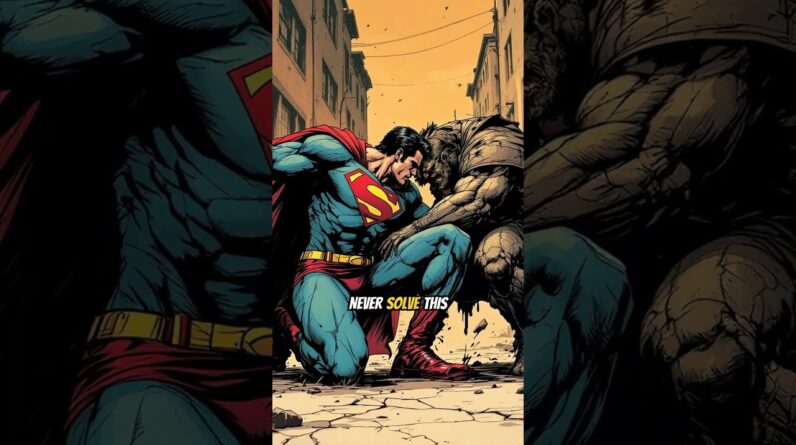
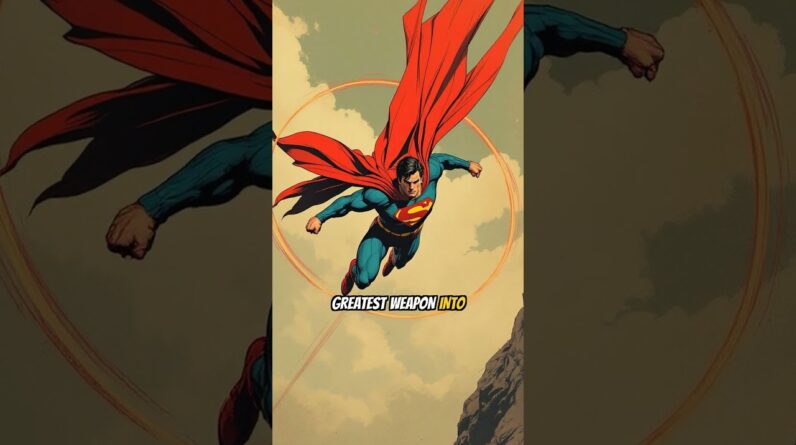
When Superman stops holding back, the outcome is terrifying. His power isn’t just in destroying villains, but in choosing not to. The true strength lies in his restraint, not his destructive force. #Superman #DCComics #Superhero #ComicBooks #Villains
What happens when Superman stops holding back? The answer is terrifying.
The premise: what does “stopping holding back” really mean for Superman?
When fans say Superman stops holding back, they’re imagining a moment when the Man of Steel deploys his entire spectrum of abilities without restraint. It’s not merely a louder punch or a faster flight; it’s the simultaneous unleashing of strength, speed, invulnerability, and energy projection at their peak. In comic book storytelling, this moment hinges on two intertwined ideas: the limit of Kryptonian physiology under a yellow sun and the ethical restraint a hero must exercise in a civilian world. If that restraint falls away, the narrative pivots from a rescue mission into a planetary-scale event. The concept is a potent mix of awe and dread—cozying up to the question: could a hero become a force of nature that cannot be contained by conventional means?
- Kryptonian solar physiology: a yellow sun’s energy powers his muscles, senses, and abilities.
- Power coupling: the more he uses, the more secondary effects ripple through air, water, and infrastructure.
- Ethical cliff edge: even in fiction, the question becomes: should a hero unleash everything if it risks civilians?
The immediate effects: how pure power manifests in real time
In a scenario where Superman taps into his full potential, you’ll see a cascade of instantaneous effects that propagate far beyond his blue-and-red silhouette. Authors often illustrate this with a combination of physical and metaphysical consequences—the kind of spectacle that reshapes a city and alters the political landscape in minutes.
- Unmatched physical force: structural stress on buildings, bridges, and streets; even steel can bow under his strength.
- Extreme velocity: air displacement creates sonic booms, shockwaves, and wind patterns that topple obstacles and scatter civilians.
- Energy projection on max: heat vision, frost breath, and other energy-based abilities ripple through matter, potentially melting, shattering, or freezing landscapes in an instant.
- Durability limits tested: even his invulnerability can be pushed beyond typical limits, leading to unintended collateral damage.
- Gravitational and seismic disturbances: a surge in power can induce ground movement, aftershocks, and micro-seismic activity.
Power catalog: what “full power” looks like in fiction
Different DC storylines treat “full power” with subtle variations, but several core competencies remain consistent: super strength, accelerated speed, augmented senses, flight, invulnerability, and energy manipulation. Below is a concise guide to how those powers tend to interact when unleashed.
| Power | Typical Immediate Effect | Potential Secondary Impact |
|---|---|---|
| Super strength | Unstoppable force against obstacles and enemies | Structural damage to buildings, collapse of weak barriers, unintended crush zones |
| Flight at max speed | High-velocity traversal and air displacement | Venturi-like wind shear, dust and debris, sonic booms over populated areas |
| Invulnerability | Resistance to damage even from extreme threats | He may bypass human-level safety measures, causing collateral harm if not controlled |
| Heat vision / energy projection | Focused energy blasts capable of cutting, melting, or sterilizing material | Collateral heat damage to infrastructure, fires, electrical grid disruption |
| Solar energy absorption | Stores power for later surges | Unpredictable release patterns, solar flare-like events in the atmosphere |
Environment matters: open field vs. dense urban centers
The consequences of a full-power exertion depend heavily on the surroundings. A wide-open landscape gives Superman room to maneuver but offers little margin for safety if a miscalculation occurs. In dense urban environments, the risk to civilians, critical infrastructure, and emergency responders escalates dramatically. Writers and filmmakers often use these contrasts to heighten tension and dramatize the stakes.
- Urban center: skyscrapers, power grids, public transit, and critical services—everything becomes potential collateral damage.
- Coastal or water-adjacent areas: tsunamis, tidal surges, and underwater seismic effects can occur from immense energy release.
- Rural settings or space: less immediate civilian risk but greater risk to satellites, space assets, and geopolitical momentum in crisis scenarios.
Global and planetary implications: beyond Metropolis
When a being like Superman pushes beyond the edge of restraint, the ripple effects aren’t limited to a single city. Comic narratives often hint at broader consequences: destabilization of weather patterns, satellite disruption, and even temporary effects on the sun’s interaction with Earth. While these ideas sit firmly in the realm of fiction, they offer rich storytelling soil for exploring how a hero’s power interacts with planetary systems, political structures, and public trust.
- Power grid strain: a powerful shockwave can induce blackouts over large regions.
- Weather reverberations: sudden gusts, pressure changes, and micro-storms could emerge in the wake of energy bursts.
- Geopolitical ripple effects: leaders must respond to a crisis that dwarfs normal disasters, changing alliances and public sentiment.
Risk factors and safety considerations: can anything contain him?
Even a hero with near-godlike capabilities must consider safety protocols. This section blends in-universe logic with practical storytelling choices to keep scenes believable and responsible.
- Containment strategies: layered defenses, non-lethal countermeasures, and rapid evacuation are essential narrative tools.
- Civilian safety: priority is always protection of civilians, with heroic decisions weighing harm versus good.
- Countermeasures: kryptonite exposure, magic constraints, or cosmic-level phenomena in some continuities can impose limits or offer plot devices.
- Ethical questions: does the protagonist have a duty to restrain themselves for the greater good?
Benefits and practical tips for writers and creators
If you’re crafting a scene where Superman—or a character inspired by him—lets go of restraint, the following tips help maintain tension, logic, and reader engagement:
- Ground power in physics with believable limits, even when the scale is fantastical.
- Use sensory detail: wind, heat, light, and sound to convey the magnitude without relying solely on numbers.
- Balance spectacle with consequence: every action should have a response in the world, not just in the hero’s body.
- Give civilians agency: show evacuation, reactions, and resilience to create emotional stakes.
- Prepare credible containment: show how institutions, heroes, or technology intervene to prevent a total catastrophe.
Case studies: fictional precedents that illuminate the terror
Case Study A — Metropolis at the brink
A city previously saved by Superman faces a moment when his full power collides with a manufactured threat. Skyscrapers buckle, power hubs fail, and the Multiverse of media coverage amplifies fear. Emergency services coordinate a massive evacuation while the hero wrestles with the choice between stopping a disaster and risking a city’s collapse.
Case Study B — Oceanic surge and island chain tremors
In a coastal arc, an unleashed Superman creates a seismic wave that travels through the ocean, causing undersea upheavals, tsunamis, and shifting tectonic plates near vulnerable coastlines. The narrative follows responders racing to avert a cascading disaster while the hero wrestles with the moral weight of his own unstoppable force.
Case Study C — A world watching the skies
Observers from around the world watch satellite feeds as a solar-like energy release distorts communications and power networks. The story explores geopolitical reactions, foreign policy shifts, and an international emergency response that redefines heroism on a planetary scale.
Firsthand experience: a civilian perspective
“I was there when the city seemed to breathe in and out with every move he made. The air cracked with heat, and the ground trembled under the rhythm of his acceleration. It wasn’t fear that stuck with me—it was awe tempered by the knowledge that one miscalculation could erase everything. We learned to move when he moved, to trust that the threat was real but not our doom.”
Such firsthand accounts highlight the human element in these stories: fear, resilience, and the realization that power without restraint invites unpredictable consequences. This perspective helps readers relate to the stakes and underscores why restraint—even for a hero with nearly limitless power—can be a moral compass as much as a tactical decision.
Quick-reference: power versus consequences (at a glance)
| Power Level | Likely Consequences | Suggested Mitigations |
|---|---|---|
| Full strength, max speed | Urban collapse risk, collateral damage, civilian injury | Evacuation protocol, crowd management, controlled use with civilian-safe zones |
| Full energy projection | Heat, fire, infrastructure damage, grid disruption | Heat containment, energy buffering, rapid emergency response |
| Solar energy release | Atmospheric instability, weather-like disturbances | Stabilization methods, research-led containment, global coordination |
Frequently asked questions (FAQ)
Q: If Superman stops holding back, can he be stopped?
A: In most stories, containment hinges on strategy and cooperation rather than brute force alone. Kryptonian physiology and the environment create lines of defense and potential countermeasures that a coordinated effort can exploit. The narrative often emphasizes restraint and responsibility as the key to preventing catastrophe.
Q: Could his actions threaten the planet?
A: It’s a dramatic premise. Writers typically scale the threat to remain thrilling without removing the protagonist’s humanity. The most convincing stories center on limits, ethics, and a plan for recovery after a staggering display of power.
Q: What lessons can we draw for real-world readers?
A: The core takeaways are about responsibility, crisis management, and the tension between extraordinary power and accountability. Even in fiction, portraying the consequences of unchecked power can deepen empathy and sense of ethics for audiences.
SEO-friendly points: keywords naturally woven into the narrative
The topic centers on Superman, holding back, full power, Kryptonian physiology, energy projection, heat vision, city destruction, Metropolis, and DC Comics lore. By aligning these terms with engaging sections, readers find clear insights and search engines recognize relevant context for fans, writers, and researchers interested in comic book theory, superhero dynamics, and narrative tension.
Meta and behind-the-scenes considerations for content creators
When optimizing an article about a high-impact superhero scenario, consider these best practices:
- Use clear headings (H1, H2, H3) and subheadings to structure the narrative for skimmability and accessibility.
- Incorporate relevant keywords in natural phrasing to avoid keyword stuffing and improve semantic relevance.
- Provide diverse content formats: descriptive prose, bullet lists, and data tables to appeal to different reader preferences.
- Include ethical and practical implications to deepen engagement and broaden appeal beyond mere action scenes.